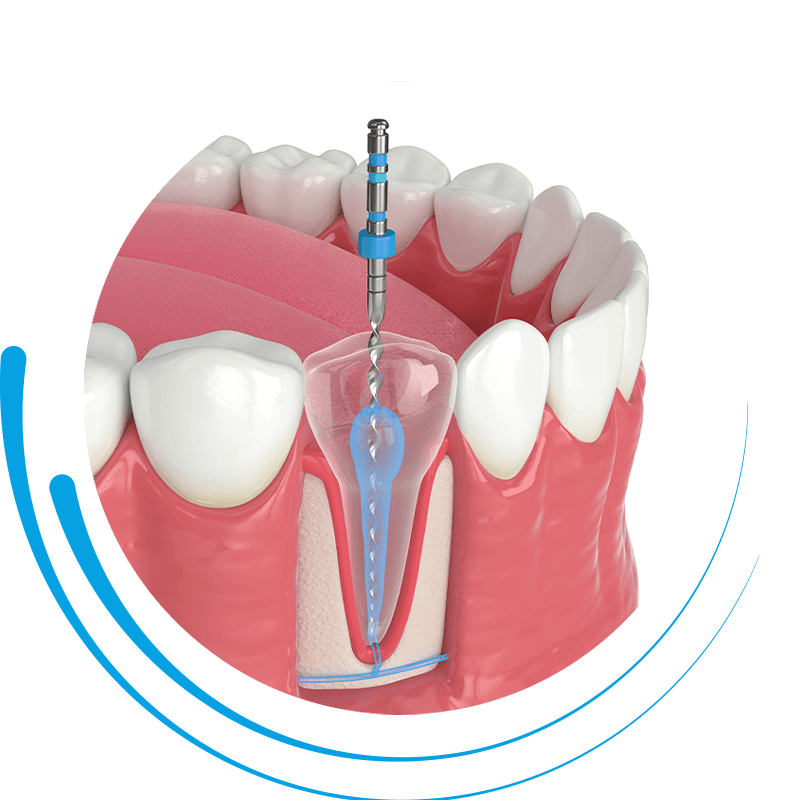
Do you experience lingering tooth sensitivity after consuming hot or cold substances? Sharp pain when biting or chewing? These symptoms often indicate an infection that has compromised the pulp within your tooth’s root. This condition can arise from severe cracks, fractures, dental injuries, or advanced decay penetrating the tooth’s interior.
Without intervention, the infection may persist, leading to persistent tooth pain, potential abscess formation, and, in severe cases, necessitating tooth extraction. If you’re noticing these signs, particularly severe toothache, effective treatment is available at Mill Pond Dental to address your dental needs.

Our team is highly skilled and possesses the expertise to perform root canal treatments with precision and accuracy at Mill Pond Dental. With decades of specialized training and experience, we are adept at diagnosing and treating infections and inflammation of the tooth’s pulp.
We understand that dental procedures can cause anxiety for some patients, which is why we offer sedation dentistry options to ensure your comfort throughout the treatment process. Whether you require local anesthesia to numb the area or prefer deeper sedation to relax during the procedure, our goal is to make your experience as comfortable and stress-free as possible. At Mill Pond Dental, we prioritize your oral health and strive to deliver compassionate care with every root canal treatment we perform.
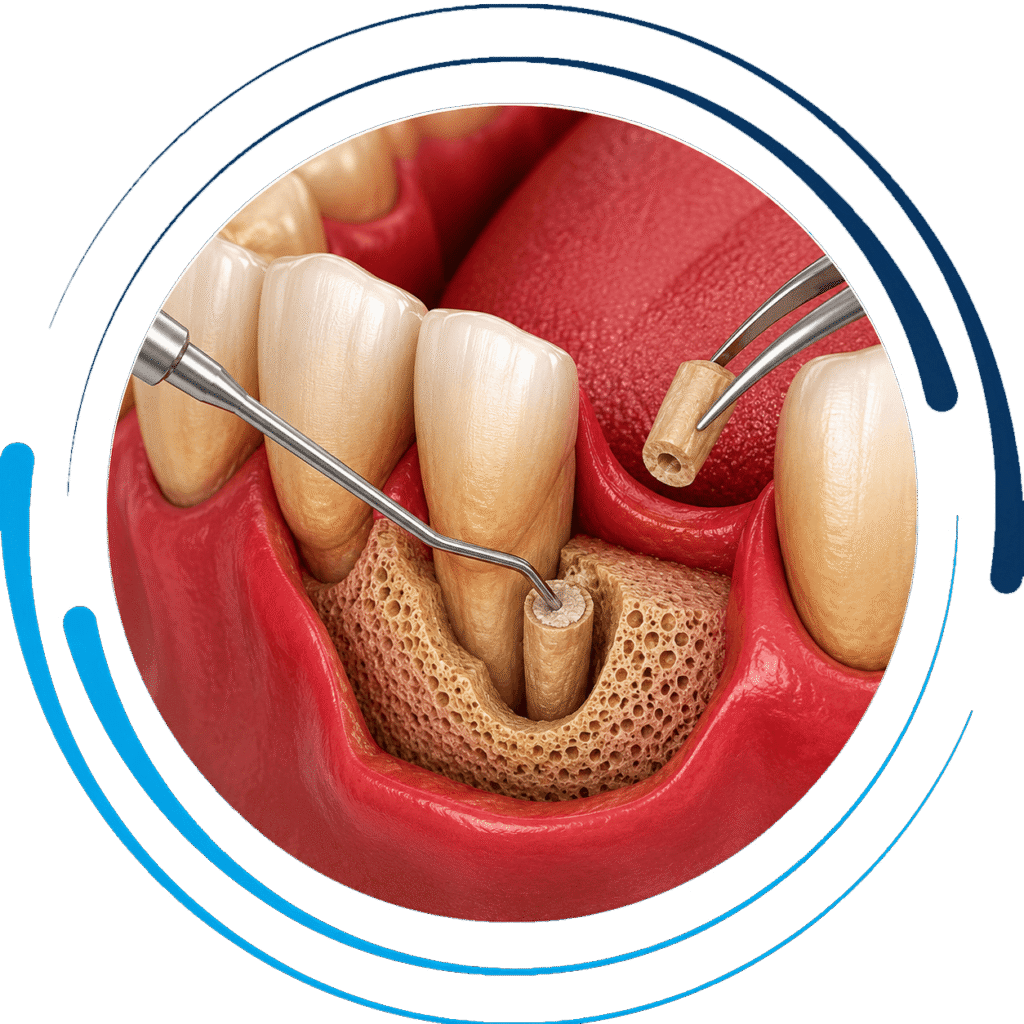
Apicoectomy surgery is recommended when a tooth with a previous root canal still has a residual infection at the tooth root. A minor procedure, root end surgery involves removing the tip of a tooth’s root to prevent further damage or extraction.
During treatment, our team gains access to the tooth root, removes the root tip, and cleans and seals the root canal to block further infection.
An apicoectomy may be recommended when a tooth that has previously received root canal treatment develops a persistent infection near the root tip.
This minor surgical procedure involves accessing the root through the gum tissue, removing the infected root tip, cleaning the area, and sealing the end of the root canal. An apicoectomy can often save a tooth that might otherwise require extraction.
When a root canal is unsuccessful or other complications arise, endodontic retreatment provides a second chance at saving a natural tooth.
During the procedure, the dental crown and filling material are removed, and the inside of the tooth is evaluated and cleaned. A new filling is added to seal the tooth, and the new or existing dental crown is re-attached.
Once your endodontic procedure is complete, you can live a comfortable and functional life without tooth pain. We’ll provide the necessary instructions to ensure a fast and healthy recovery. In general, you can expect the following benefits from treatment: